Traveling in Guatemala to Chimaltenango, Bolo de Oro, Labor de Falla, Cerro Alto, Lago Atitlan, Panajachel, and San Lucas Toliman.
Jade: We went to Chimaltenango it was a big place. We saw a lot of chicken buses and mostly tuktuks. We went in a chicken bus to get there.
Miriam’s House
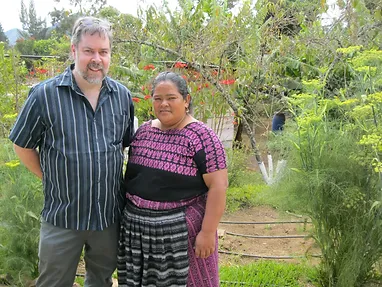
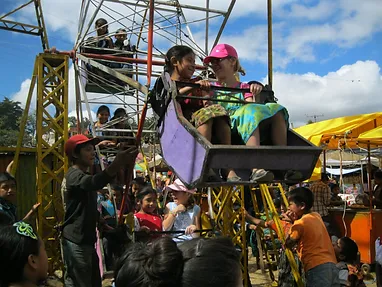
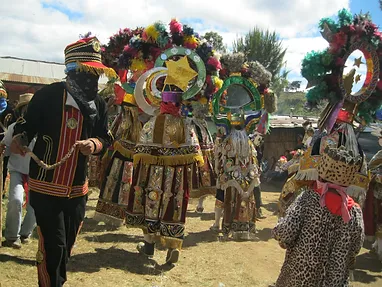
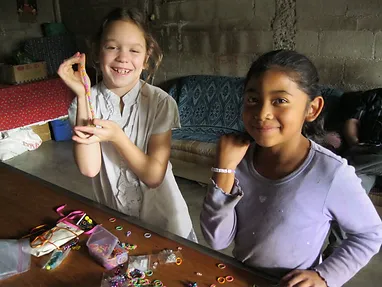
Jade: We went to a friend called Miriam’s house. We stayed and met her daughter Estrella and we made lots of bracelets of rainbow loom. We put on a fashion show at their house and all the clothes belonged to Estrella. I wore a blue shirt (huipil) and a skirt (corte) made out of clothing and a belt to put around. I also got a shawl to put around my shoulders. We went to a feria which is a party and we saw dancing and singing. There were two ferris wheels, one for adults and one for kid’s.
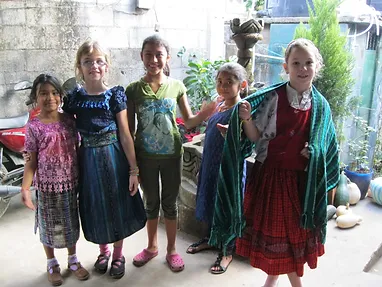
Mady: While at my friend Estrella’s house we went to this festival called the Celebration of the Black Christ. It was really fun and there was a fair and we got to go on some rides. It was really easy to talk in Spanish to my friend because she didn’t go hard on me she took it easy.
Ronaldo’s House (Teacher at Labor de Falla School)
Jade: We then went and slept at another friend’s house and they had two chihuahua’s, one girl and one boy. It was so cute because one was wearing a blue sweater and one was a pink sweater. The houses had metal roofs and concrete.
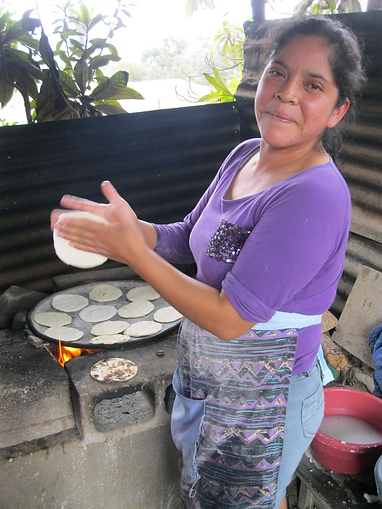
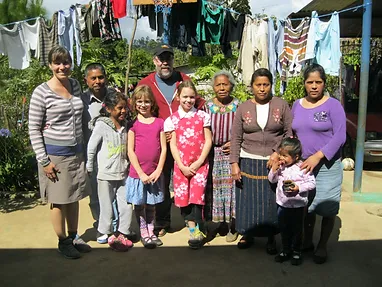
Mady: Rosa (Roaldo’s wife) is making tortillas (which are round and made of corn flour).
Jade: Sometimes I put rice inside and eat it. People in Guatemala eat tortillas at almost every meal.
Labor de Falla School
Mady: We went to a school in Labor de Falla – which is a small community on a dirt road. And we got to go to each class and talk about where we live and who we are. And here is a video with the kid’s from the school:
Mady: The schools are different because they don’t have as much stuff as us. They don’t have art class, they don’t have library. But they do have desks and chairs, and I liked that when recess came all the teachers made us lunch. After recess we went to the littler classes. And the kids were all shorter than us. Some of them were in grade one and were 8 years old. The students asked where we lived, how old we are, what grade we were in, what kind of animals you can find back home in Canada. At the school there were 2 girls that were captain of their school basketball team which won the departmental (provincial) championship.
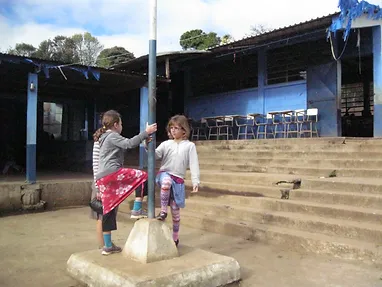
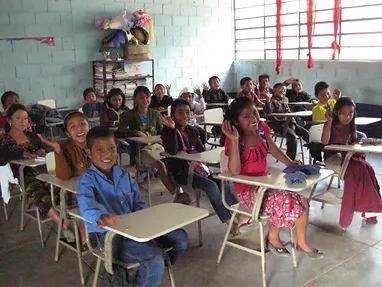
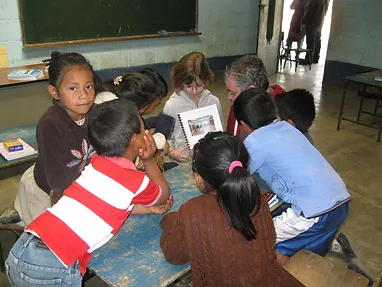
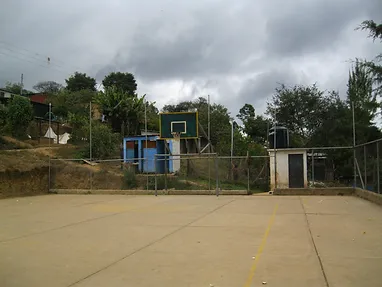
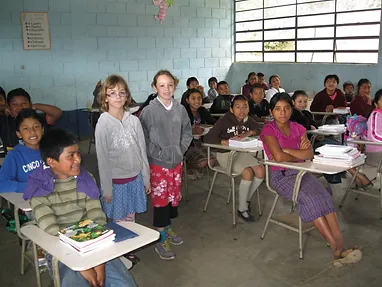
Jade: The school was not like ours, it only had a basketball court and a grassy meadow to play in. We went all the way around to every grade and talked about Canada. We showed the book that my teacher Mrs. Chase gave me before we left. We showed pictures that were pictures of winter weather, summer and our dog named Nuala and our two cats named Pushie and Taz. I liked that the kids were very nice in the school. And I understood when they said “quieres jugar” and I went to play with them. We played soccer with four girls.
Lake Atitlan – Panajachal:
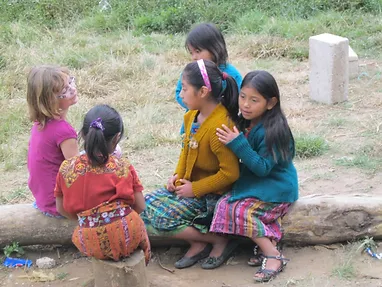
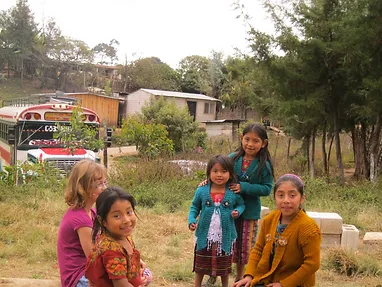
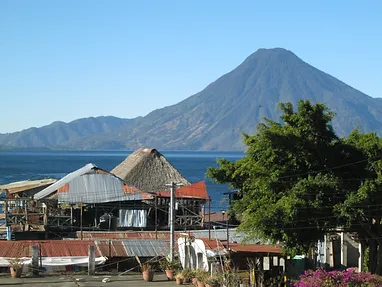
Mady: We went in a pick-up truck from Labor de Falla to Panajachal. The lake is surrounded by a volcano. It was really pretty.
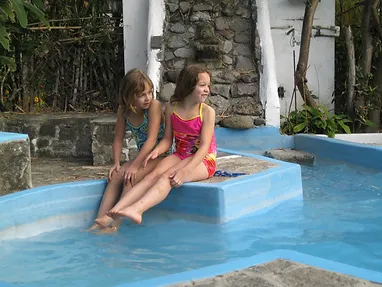
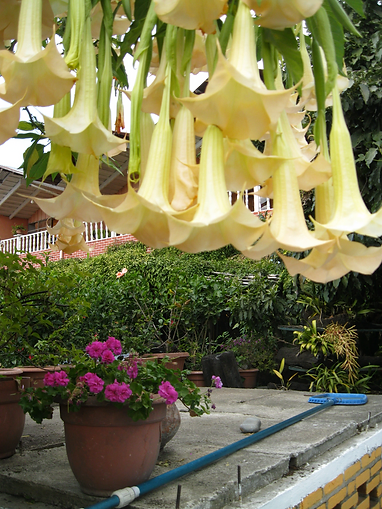
Jade: I thought there was going to be no pools in the hotels but as a surprise to me in one hotel, called Playa Linda in Panajachel that had a pool. It was freezing.
IMAP: Instituto MesoAmericano de Permacultura (San Lucas Toliman):

Mady: We took a boat across the lake from Panajachal to San Lucas Toliman. It was bumpy just like a roller coaster sometimes. We walked into town and then took a tuktuk to a permaculture place.
Jade: While getting to IMAP I had a wiggly tooth. I tried to pull it out and then my Dad was wiping my mouth and the tooth came out. I got 10 quetzales from the tooth fairy. That is 1 dollar and 60 cents Canadian.
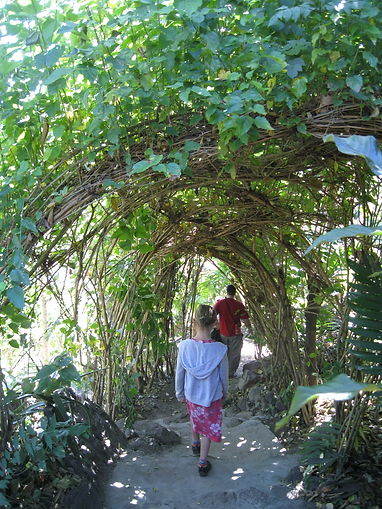
Mady: Permaculture is when people help the earth and plant plants and make medicine and food. We were at IMAP which is the Instituo MesoAmericano de Permacultura. Permaculture is made up of two words – permanent agriculture. The plants were really nice and healthy. When we were bit by bugs we rubbed basil in our hands until it had juice and then rubbed it on our legs to keep the bugs from bothering us. There were big big trees and big big plants that were all over the place. There was aloe vera and at the bottom it was really thick. We saw a giant grasshopper in our cabin. It was about six inches long.
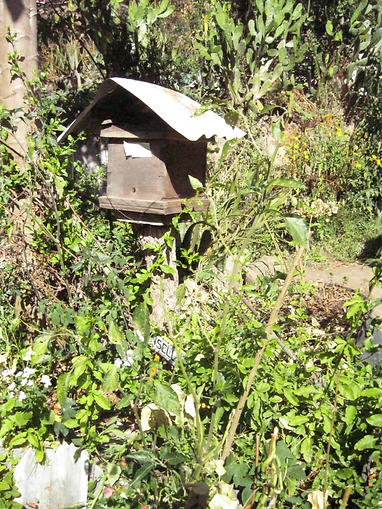
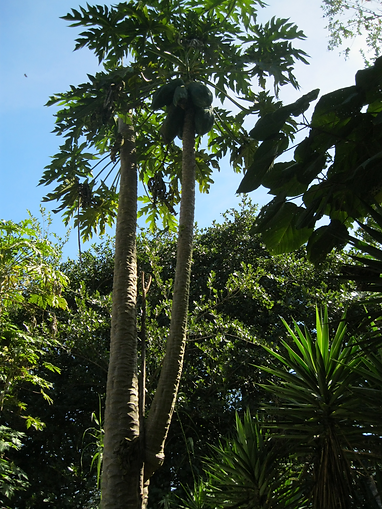
There were mini bees that were so small and they didn’t have any stingers and the hives were sitting in the garden on big sticks. There were trees that had papaya and trees that had coconut. They grow many many plants all together. And in the garden there are these tires where people can get in and weed in a circle and weed all the plants rather than in a row where you use more energy. But if you weed from a circle, you save energy,
They told us a story about the Tres Hermanas (Three Sisters). The black corn was named Juanita, the white corn was named Maria, and the Yellow corn was named Rosa. They told this story about the corn where this big storm came and all the other plants were there with the farmer and he could only get 2 kinds of corn away. Juanita was left alone in the rain, but then the other plants arrived (beans and squash – frijoles and calabaza) and they wrapped around Juanita’s roots. So, the plants help each other. The corn helps the beans stand up and the beans give the corn nitrogen which helps them grow and the squash have big leaves so when raindrops hit the leaves it slows down the rain and they drip off slowly and that prevents erosion. So permaculture is this big place that helps the environment and where all the plants are grown together.
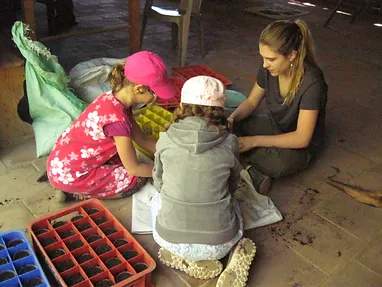
Jade: Here we helped plant seeds. They were broccoli seeds.
These are the Maya symbols that relate to our names and are part of planting cycle.
Jade: I have a name which is “E” which means “wildcat”, Mady has a name “Kat” that means spider.
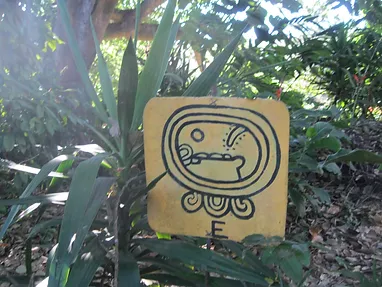
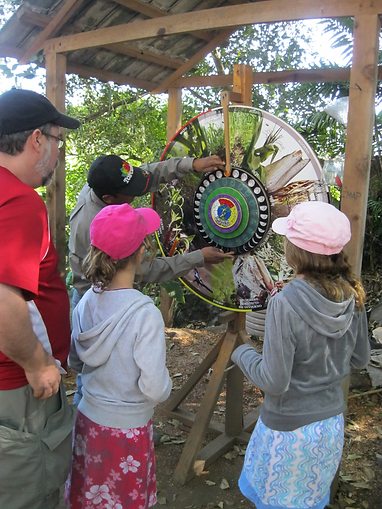
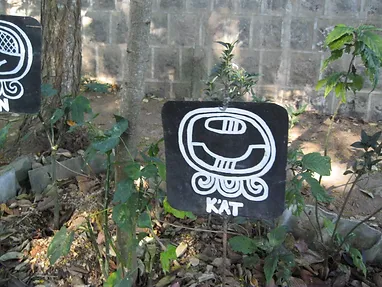
Mady: You get your symbol according to the day you are born (Maya calendar.)
CCDA (Comite Campesino de Altiplano) “Breaking the Silence: Just’Us Coffee” – Beneficio (San Lucas Toliman):
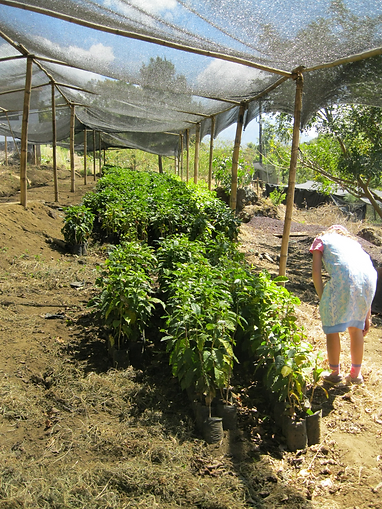
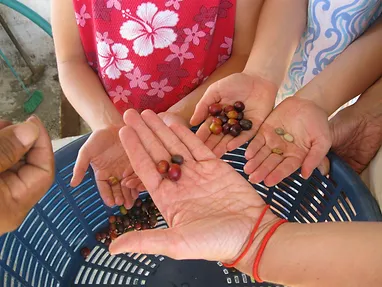
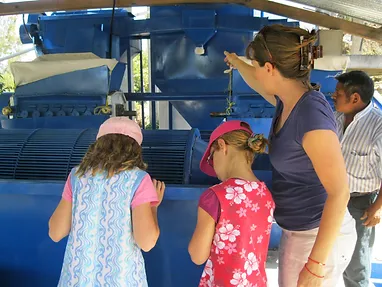
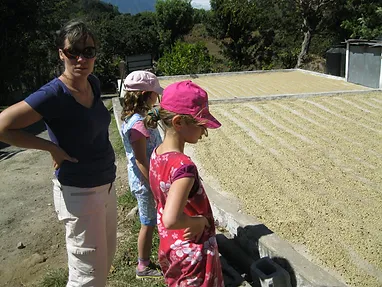
Jade: We went to a coffee place and we saw how coffee is made. First they pick it from the trees. It can be yellow, a little bit orange, purple or deep, deep black. After they pick the coffee beans they peel them in a special machine that spits out the shells and leaves the left over beans. Once that is done they put it in a washing machine to wash it. And then they put it on a big area outside to dry it in the sun. And then they send it to Canada and sell it to the Just’Us coffee store where we buy it.
Mady: We went there to learn about coffee and Fair Trade. Fair Trade means the farmers get a fair price for their coffee and the farmers make more money.
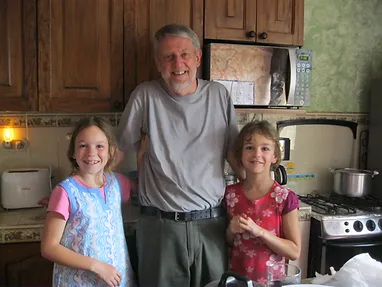
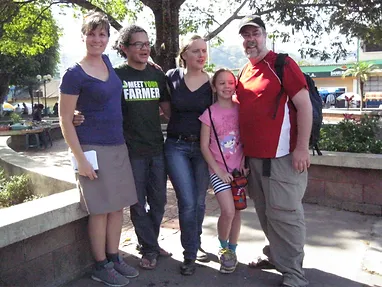
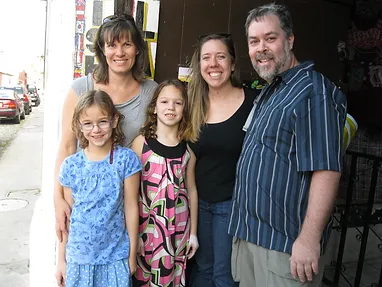
Dave (missing: Lynne) in Antigua
Quique and Jackie in San Lucas Toliman (Thanks for your help with Jade’s wiggly tooth! Steve & Ev)
Val in Antigua
Jade: We will be traveling to Tikal and we’ll tell you more about it when we get there.